Featured research
Can titania nanotubes improve bone healing?
Summary
A new study shows how titania nanotube surfaces stimulate migrasome release and improve bone regeneration, with MI-SIM imaging revealing key cellular interactions.
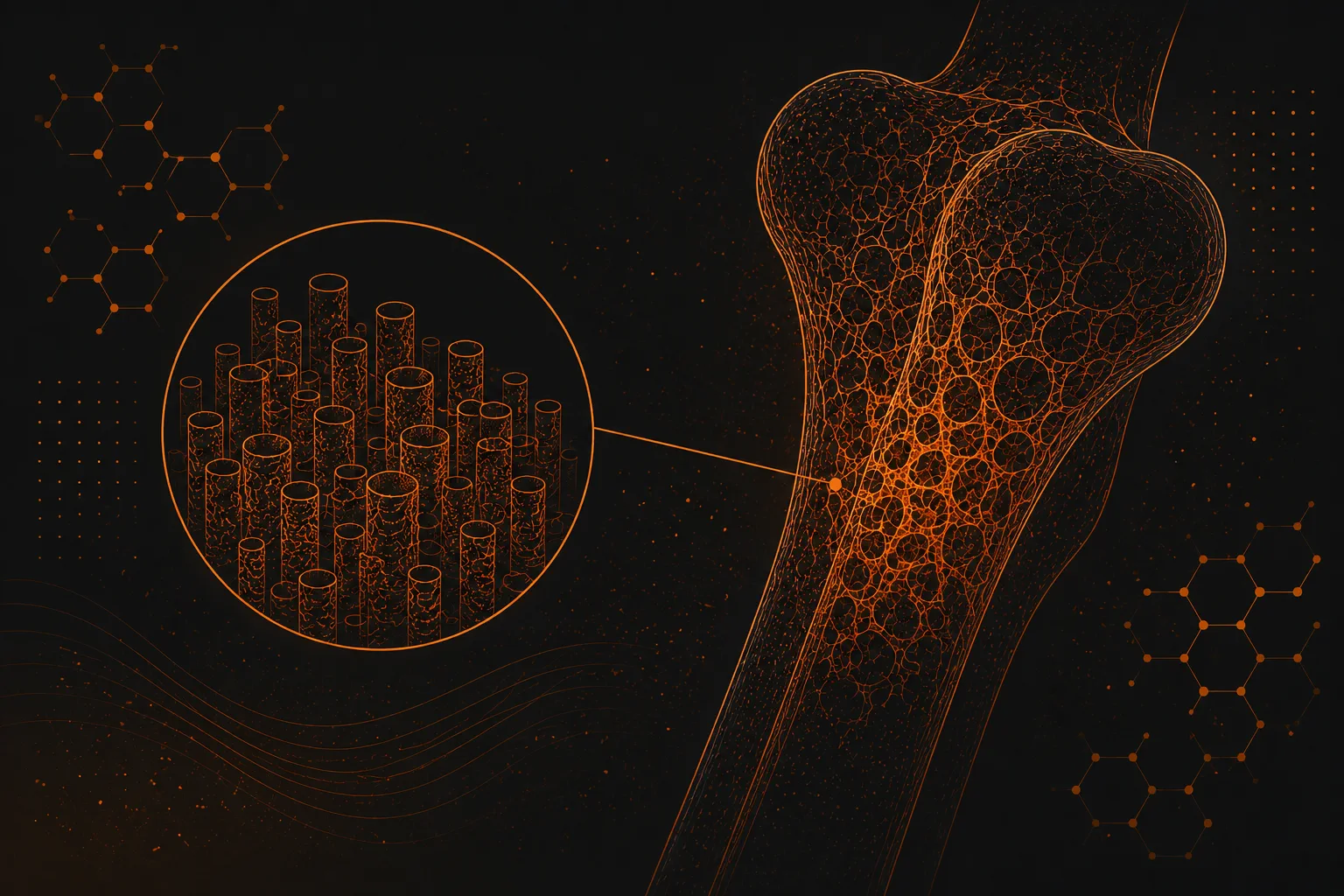
Bone healing after fractures or implants relies on efficient communication between immune cells and stem cells. A new study explores how titania nanotube (NT) surfaces influence this process, showing that they can trigger immune cells to release migrasomes, tiny extracellular vesicles that enhance bone regeneration.
How titania nanotube surfaces enhance bone healing
Researchers found that NT surfaces significantly impact the behavior of macrophages, a type of immune cell involved in tissue repair. When exposed to NTs, macrophages shifted into an M2 pro-healing state, releasing more migrasomes. These vesicles play a key role in guiding mesenchymal stem cells (MSCs) into bone-forming cells.
Key findings
- Titania nanotube surfaces drive M2 macrophage polarization, creating a pro-regenerative environment.
- Increased migrasome release enhances the ability of MSCs to differentiate into bone cells.
- Coating titanium implants with migrasomes significantly improves bone formation in both laboratory and animal models.
The role of migrasomes in bone regeneration
Unlike other extracellular vesicles, migrasomes remain anchored to surfaces, allowing for more precise control of cell signaling. In this study, macrophage-derived migrasomes activated the PI3K-AKT pathway, a critical mechanism for bone growth.
The researchers went further by coating titanium implants with migrasomes to test their therapeutic potential. The results showed faster and stronger bone formation around the implants, both in lab experiments and in live animal models.
CSR Biotech's MI-SIM super-resolution imaging highlights migrasome interactions
A crucial part of this research relied on advanced imaging techniques to track migrasome formation and uptake. The study used MI-SIM (Machine Intelligent SIM) from CSR Biotech, a high-resolution imaging platform designed to visualize cellular interactions with nanomaterials.
MI-SIM provided detailed insights into how migrasomes form on titania nanotube surfaces and how they are internalized by mesenchymal stem cells. This level of precision helps researchers understand the mechanisms behind osteogenesis and supports the development of next-generation biomaterials.
Implications for future bone implants
These findings suggest that migrasome-coated implants could be a breakthrough for orthopedics and dentistry. Traditional titanium implants rely on passive osseointegration, where bone gradually forms around the implant. By adding a bioactive surface that actively promotes healing, NT-based implants could speed up recovery times and improve long-term outcomes.
Could migrasome-based coatings be the future of bone regeneration?
With growing interest in biomaterials and regenerative medicine, this study highlights how nanostructured surfaces can enhance immune-driven healing. Further research is needed to explore how migrasome-coated implants perform in human trials, but the potential for next-generation bone regeneration strategies is clear.
Read the full study: https://doi.org/10.1002/adhm.202400257