Featured research
Enzyme–powered nanoreactors drive targeted cancer therapy
Summary
A study in Advanced Materials demonstrates tumor-targeting nanoreactors that combine enzyme cascades, drug delivery, and immune activation, visualized using MI-SIM imaging.
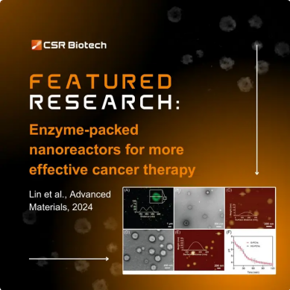
A recent breakthrough in cancer nanotechnology has demonstrated how enzyme-powered nanoreactors can trigger precise anti-tumor effects through ferroptosis, apoptosis, and immune activation. The research, published in Advanced Materials, showcases a smart delivery system that could redefine combination cancer therapy.
How coacervate nanoreactors work
The study introduces tumor microenvironment (TME)-responsive vesicles, called HGS-PCVs, designed to deliver three key agents to liver tumors: glucose oxidase, hemoglobin, and the anti-cancer drug sorafenib (SRF). These vesicles are formed through coacervation using bioinspired polypeptoids, creating semipermeable nanoreactors that allow glucose to enter while controlling internal reactions.
Once inside the tumor, the glucose oxidase converts glucose to hydrogen peroxide, which, in the presence of hemoglobin, generates toxic hydroxyl radicals. This process not only kills cancer cells via ferroptosis and apoptosis, but also lowers pH, triggering the controlled release of SRF. This combination creates a synergistic therapeutic effect.
Visualizing nanoreactor performance with MI-SIM
The research team used MI-SIM (Multi-Input Structured Illumination Microscopy) to capture detailed 3D images of these vesicles in action. MI-SIM enables high-resolution, multichannel imaging of enzyme-loaded nanocarriers, making it possible to track co-delivery, reaction dynamics, and vesicle integrity in situ.
By visualizing these vesicles with MI-SIM, the team could directly observe how the system activated within tumor-like conditions, supporting optimization of delivery mechanisms.
Enhancing cancer immunotherapy outcomes
Beyond direct tumor damage, the treatment also initiated immunogenic cell death, promoting dendritic cell maturation and an adaptive T-cell response. The result was improved tumor control and reduced metastasis in vivo.
This study highlights how integrating enzyme cascades, TME targeting, and advanced imaging tools like MI-SIM can expand options in cancer immunotherapy and drug delivery research.
Read the study: https://doi.org/10.1002/adma.202407378