Featured research
How CRSP8 changes fatty acid metabolism in liver cancer
Summary
Super-resolution live-cell imaging reveals how CRSP8 alters mitochondrial organisation and fatty acid metabolism in liver cancer, highlighting potential avenues for therapeutic research.
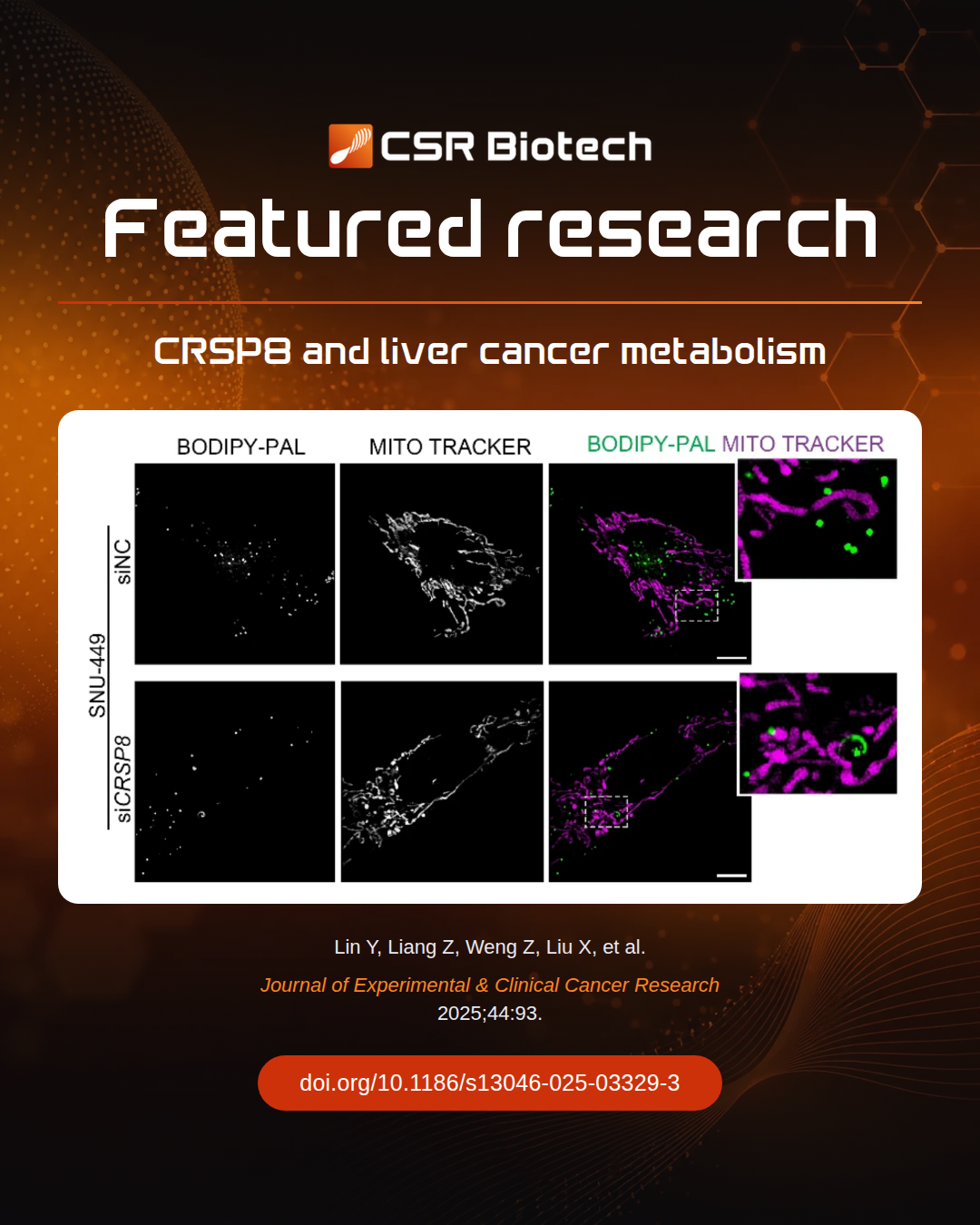
How do changes in fatty acid metabolism contribute to liver cancer progression, and what can advanced microscopy reveal about these processes?
A study from researchers at Sun Yat-sen University, published in the Journal of Experimental & Clinical Cancer Research, investigated how CRSP8 influences fatty acid metabolism in hepatocellular carcinoma (HCC), the most common form of primary liver cancer.
Using super-resolution live-cell imaging alongside molecular and biochemical techniques, the researchers examined changes in mitochondrial morphology, lipid droplet accumulation and intracellular lipid trafficking. Their findings identify a mechanism linking CRSP8 expression to altered fatty acid metabolism and tumour progression.
Visualising changes in mitochondrial morphology and lipid metabolism
Mitochondria play an important role in cellular energy metabolism, including fatty acid oxidation. Changes in their structure and interactions with lipid droplets can provide insight into metabolic dysfunction.
The researchers observed increased mitochondrial fragmentation and lipid accumulation in HCC cells associated with elevated CRSP8 activity.
When CRSP8 expression was reduced, mitochondrial morphology became less fragmented, with improvements in mitochondrial network organisation and increased colocalisation between fatty acids and mitochondria.
Super-resolution live-cell imaging enabled the team to examine these subcellular changes and track fluorescently labelled fatty acids in relation to mitochondrial structures.
These observations helped connect changes in mitochondrial organisation with the disruption of fatty acid utilisation in liver cancer cells.
Understanding the role of PPARα nuclear transport
The study also investigated how CRSP8 affects PPARα, a transcription factor involved in regulating fatty acid oxidation and lipid metabolism.
The researchers identified a mechanism in which CRSP8 increases RAN expression, promoting RAN/CRM1-mediated nuclear export of PPARα.
This reduces the nuclear localisation of PPARα, suppressing pathways involved in lipid droplet degradation and fatty acid oxidation.
By combining imaging with molecular analysis, the team demonstrated how altered intracellular protein localisation can contribute to lipid accumulation and metabolic reprogramming in HCC cells.
Investigating potential therapeutic approaches
The findings also suggest that altered fatty acid metabolism could present opportunities for further therapeutic investigation.
In experimental tumour models with elevated CRSP8 expression, combining the fatty acid synthesis inhibitor orlistat with anti-PD-L1 immunotherapy improved tumour growth suppression compared with anti-PD-L1 treatment alone.
Although these findings are preclinical and require further investigation before clinical application, they highlight the potential importance of targeting metabolic pathways alongside existing cancer therapies.
The value of super-resolution microscopy in cancer research
This research demonstrates the value of high-resolution cellular imaging for investigating the relationship between organelle structure, intracellular transport and metabolic activity.
By observing mitochondrial morphology and lipid trafficking at the subcellular level, researchers can connect molecular mechanisms with visible changes in cellular behaviour.
At CSR Biotech, we recognise the importance of advanced imaging technologies in supporting research into complex biological processes. Studies such as this demonstrate how super-resolution microscopy contributes to understanding cancer metabolism and identifying mechanisms that may inform future therapeutic research.
Original research
Title: CRSP8-driven fatty acid metabolism reprogramming enhances hepatocellular carcinoma progression by inhibiting RAN-mediated PPARα nucleus-cytoplasm shuttling
Authors: Lin et al.
Journal: Journal of Experimental & Clinical Cancer Research
Published: 11 March 2025