Featured research
New study highlights role of SLC7A11 in lysosomal acidity – with MI–SIM super-resolution imaging.
Summary
A Cell study reveals how SLC7A11 regulates lysosomal acidity, with MI-SIM imaging confirming its localization and role in neurodegenerative disease mechanisms.
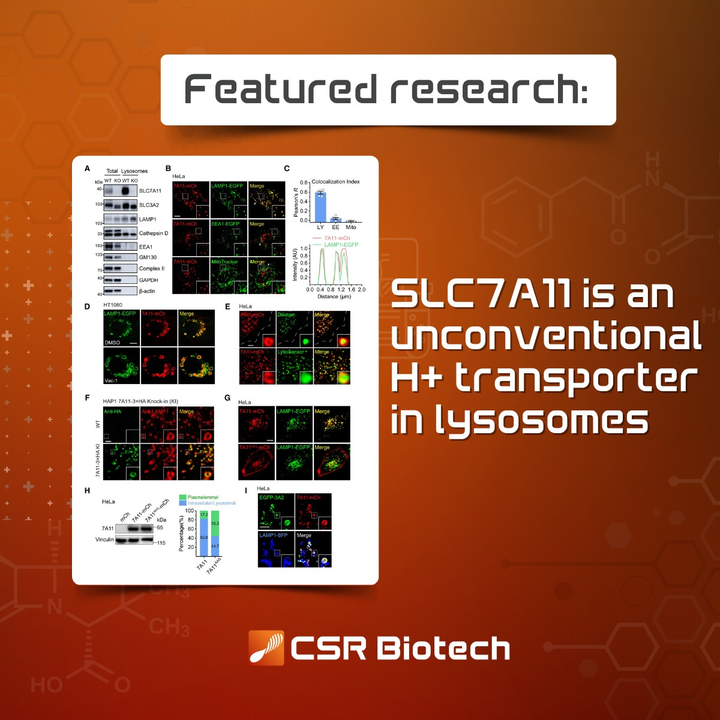
A major new Cell publication has shed light on how SLC7A11, a protein previously linked to Parkinson's disease, regulates acidity inside lysosomes. The researchers showed that loss of SLC7A11 increases lysosomal acidity, a key factor in disease progression, and demonstrated that restoring its function repairs this imbalance.
To visualize these mechanisms with exceptional clarity, the team turned to super-resolution microscopy. CSR's MI-SIM platform enabled them to observe SLC7A11 forming distinctive ring-like structures around lysosomal markers, a level of resolution beyond traditional confocal systems. This imaging confirmed SLC7A11's localization and functional role at the lysosomal membrane.
Beyond its technical findings, the study carries clinical relevance. Researchers observed similar effects in patient-derived neurons carrying SLC7A11 mutations and confirmed the mechanism in mouse models. These results highlight potential therapeutic strategies targeting lysosomal pH in neurodegenerative disease.
CSR's MI-SIM technology played a role in enabling these observations. High-resolution imaging remains central to understanding complex biological systems and supporting the translation of research into therapeutic development.